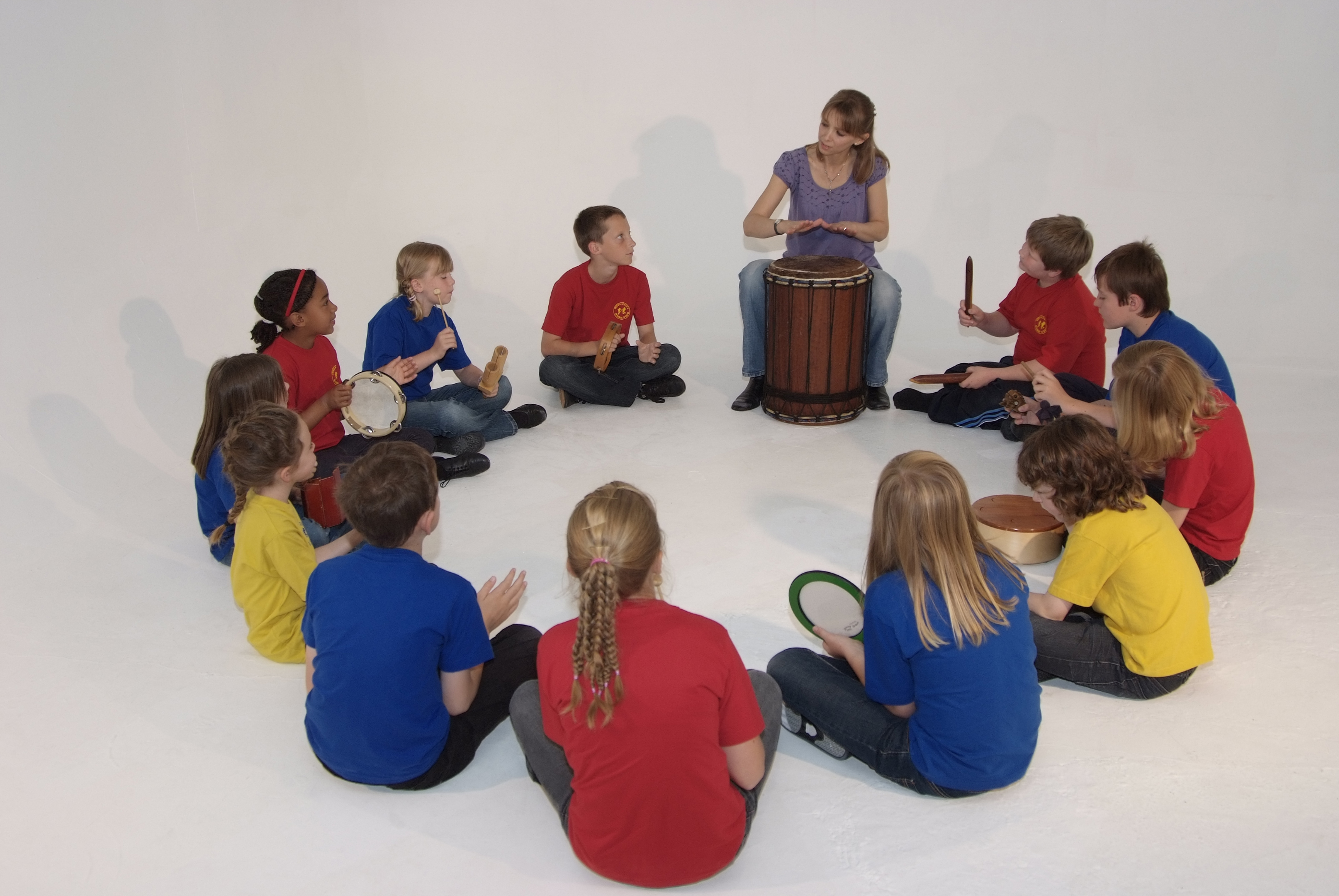
Music is not rocket science!

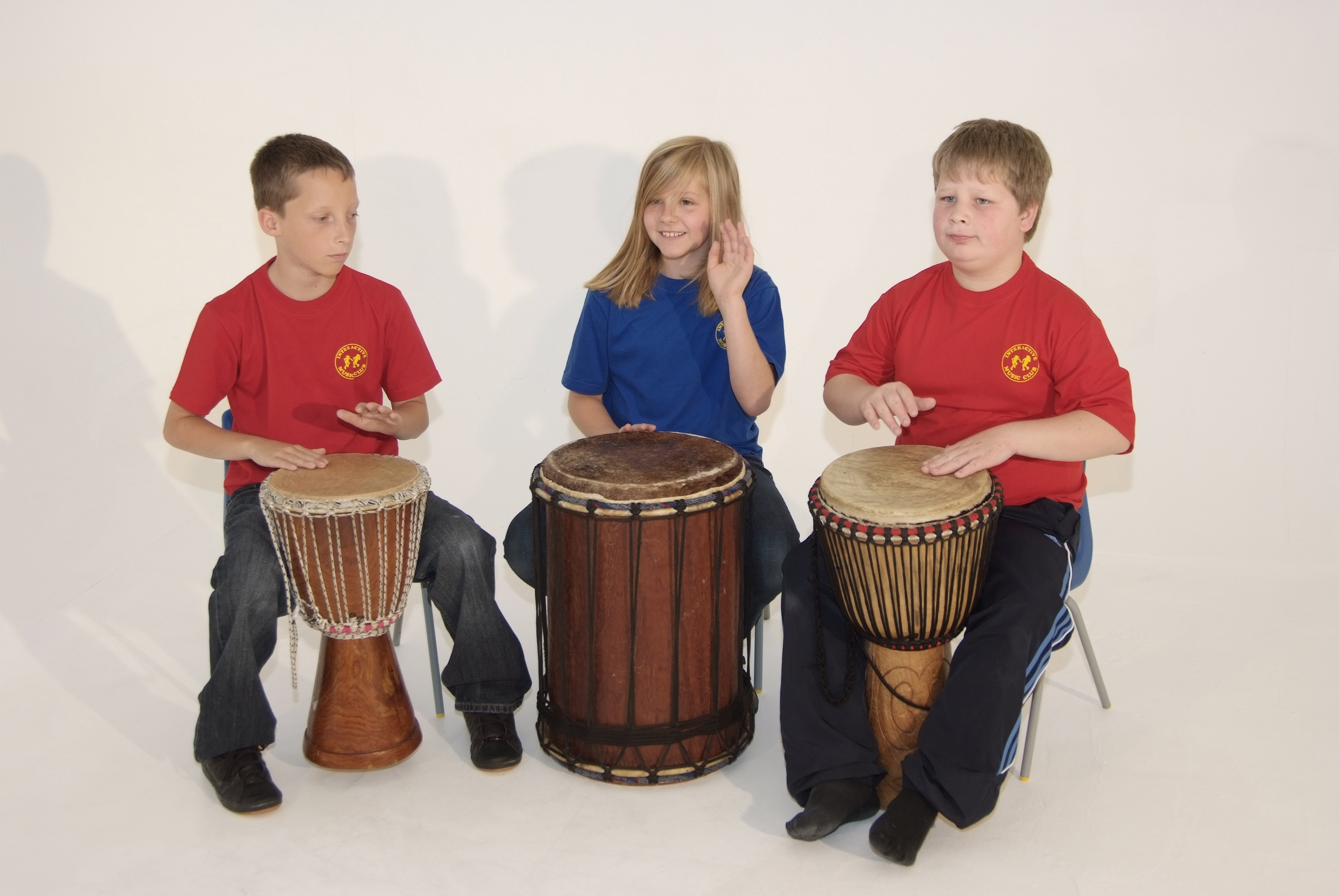
Studio shoot for the Interactive Music Club taken on 28/06/09Music is not rocket science – you don’t need to be a specialist. It can be learnt in steps alongside the children –   I always say if you can speak, you can chant and if you can chant you can create rhythms, and then you are HALF-WAY THERE!

I once ran a course and there was a man there who came to me at the end and said ‘I have been teaching for 25 years and I never thought I could teach music – NOW I KNOW THAT I CAN’

Active Music is the ‘CAN-DO’ approach to classroom music teaching, enabling ALL NON-SPECIALISTS TO TEACH MUSIC.

2014 Music Curriculum – the ‘inter-related dimensions of music’ – EASY and FUN!

puppet gameIn the ‘aims’ and the Key Stage 1 and Key Stage 2 content of the 2014 Music National Curriculum it talks about the ‘inter-related dimensions of music’.  This basically means the elements of practical musicianship.


  • PULSE: They seem to have missed off PULSE for some reason, which I consider the first building block – the child needs to be able to feel and express the PULSE in a piece of music as a foundation to their musical understanding. PULSE is like a regular heartbeat running steadily through the music.
  • PITCH: The next is PITCH which is the melody and the way the notes change from low to high and vice versa.
  • RHYTHM: For some reason they use the word ‘duration’ but they basically mean RHYTHM (which is a much more exciting word!) If you were singing a song, the rhythm would follow the pattern of the words. If you sing a song and clap the words, your clapping would be different to the PULSE. This analogy can be taken as a starting point and later applied to music with no words.
  • DYNAMICS: Loud and soft
  • TEMPO: Fast and slow
  • TIMBRE: The type of sound – whisper/hum/sing/talk (examples with the voice) or tinkly/hard/soft (examples with instruments
  • TEXTURE: Layers of sound
  • STRUCTURE: The way the music is laid out –e.g. 4 notes in a bar, 4 bars in a phrase etc (a bit like how words, sentences and paragraphs are put together in writing)
  • APPROPRIATE MUSICAL NOTATIONS:  I’m not sure what they mean by ‘appropriate’ but I would imagine anything that you can use to read music from, whether they be made up symbols to be read in a particular order, stick notation, solfa symbols or traditional stave notation…

In fact, the only element of musical skills that has changed from the previous National Curriculum that I can see, is the addition of ‘stave notation’ in the Key Stage 2 requirements. For most children in a primary classroom, this would be the beginning stages of reading music and nothing to be too daunted by.

So that’s the ‘inter-related dimensions of music explained – no different from musical skills found anywhere!!!  National Curriculum guidelines may change but musical skills do not!

Kodaly and the National Curriculum

primarymusicspecialist.comWhen you are teaching Kodaly, the practical musicianship comes first, whatever the National Curriculum says.  When following the basic principles, your teaching will always start with experiencing the pulse, and songs with simple rhythm and pitch ingredients.  When the children have lots of experience of these songs and games, certain ones will be chosen as ‘teaching songs’ and will be used to teach specific rhythm and pitch elements.

The Kodaly concept follows a step-by-step logical and progressive sequence to teaching music. It begins with the use of the voice and is based almost entirely on practical musicianship skills.  About 80% of the Music National Curriculum requires practical musicianship skills. Brilliant!

The National Curriculum basically says:

Learn to sing!

Use voices!

Create and compose music on their own and with others

Use the ‘inter-related dimensions of music’ – pitch, rhythm, dynamics, tempo, timbre, texture, structure and ‘appropriate’ musical notations.

Improvise music

Recall sounds with increasing aural memory

Use and understand staff and other musical notations

All this and so much more is all found, brilliantly put together, in the Kodaly concept of Music Education.  I highly recommend visiting the British Kodaly Academy website (BKA) and checking out their amazing courses and resources.

London Music Course – Jan ’14 Testimonials

TESTIMONIALS from the teachers who attended the 1- day music course in Hillingdon, LONDON on 31st Jan 2014:

Music Curriculum levels

Amazing! I am bursting with ideas to take back to school – So great to go on such a practical course – fantastic – I didn’t want to leave!  Sarah McManus – Ruislip Gardens Primary School

Very passionate and enthusiastic tutor!  This was really thorough and gave great ideas for practical and pacey activities – makes ‘pitch, texture, timbre’ etc more relevant and real (not boring!) – I am more confident to run music lessons and other teachers would benefit from knowing how to teach with these materials in class.  Would LOVE an inset in my school run by Sally to give teachers confidence and ideas!    Laura Altman, Fairway Primary School

Excellent practical session with clear, focused outcomes. Also LOADS of resources to take away and use – fantastic – thank you!        Mark Morris – the Priory Witham Academy

Trainer – fabulous!  So enthusiastic.  Incredible the total package she has createdThis course takes music back to basics and shows you how to teach the subject systematically from Year 1 to Year 6 – amazing! Very practical – activities that can be taken straight back into the classroom and can also be applied to other topics. A totally inspiring presenter – passionate about her subject and how to get children actively involved in music –  Liz Hay – Four Lanes Junior School, Basingstoke

primarymusicspecialist.comPractical, fun and lots of ideas and resources – the way the resources are scaffolded to build on/extend on the basic idea is really useful – Sally was very thorough and engaging – thank you!    Simon Bennett – St Stephens Primary School, Twickenham


We got lots of great ideas and materials – a great day, thank you!    Lois Mattson ACS International School, Hillingdon

Very practical and informative and lots of NEW IDEAS – creative and useful starter/action music activities for all levels – Claire Ward – Discovery Primary School, Thamesmead

Lots of practical activities that are easy to use in the classroom – thank you!  Helen Jones – Discovery Primary School, Thamesmead

I really enjoyed today. It was a productive and informative workshop with many games and strategies which will be useful in my Spanish classes.  Thank you so much – a great course!            Marjorie Mora, ACS International school, Hillingdon

3335292Excellent delivery – fun and informative – great use of resources – thank you very much…we learnt new repertoire, how to deliver music skills in a logical and progressive way, and learnt inclusive lessons for children of all abilities – fun!

Yvonne White, Victoria Special School/freelancer

A very inspiring day. I loved the solfa characters and the fact that you don’t need to write full notes for rhythms. I’ve learnt that you can really learn any song and develop it in a way that progresses from Reception to Year 6.  I love practical music teaching and I could really relate to what we learnt today – it’s also reaffirmed that I’m on the right track with my teaching. The practical element of the day has been invaluable – I’ve loved it – thanks Sally – totally inspiring!   Mrs Lucy Slater, Our Lady of Peace Catholic Primary School, Slough

Excellent course where I have learnt lots of new skills – fantastic day!  Emma Good, Stanton Bridge Primary School

If these testimonials have inspired you, why not attend the next 1-day music course at the HORSHAM TRAINING CENTRE on 28th March 2014?

Primary Music SpecialistPlease phone me on 07963 431405 if you would like to know more or book a place.  Look forward to seeing you there!


UNACCOMPANIED SINGING – A GREAT WAY TO LEARN

Singing game with xylophones

Singing game with xylophones

Backing tracks can be really fun and create an instant feel-good factor in the classroom.  However, when you take the backing tracks away for a while, you will be able to start to hear the children’s individual voices.

Many children, when singing with backing tracks have a lovely safe place to hide out in ‘mime mode’ and can hope for the rest of the group to carry them along.

Have you ever asked a child to sing one of these songs by themselves, unaccompanied?  I bet many children would be scared to try. They are carried along by the feeling the song gives (which I agree can be great) but are they really developing THEIR OWN voices and working on THEIR OWN musicianship skills?

In English would you ask a child just to listen to a story and try to read along without ever hearing their individual reading ability and moving them on from where they are?

In maths would you just do lots of general whole class questions and allow the less confident children to always let the more able answer?

Of course not – that would not be developing their OWN SKILLS

That’s why it’s SO IMPORTANT to sing UNACCOMPANIED at times, and really LISTEN to the children’s voices.  From there you can ASSESS where they are and know how to help them MOVE FORWARD.  Isn’t that what teaching is about?

ANALYSING THE SONGS YOU TEACH YOUR CHILDREN

puppet gameHave you ever thought about analysing the songs you teach your children?

A song can be analysed in terms of its rhythm content, pitch content and range, among other things.

I love analysing songs – it’s great fun to take a song apart and see what it really contains – then you can work out if a song is a good one for your children –

Take ‘hot cross buns’ for example.  The pitch content is Do Re and Mi. The rhythm content is Ta, Te-te- and ‘sh’.

In traditional language the pitch content would be C, D, E or G, A, B for instance and the rhythm content would by crotchets, quavers and rests.

Have you ever sung the song ‘Cauliflowers fluffy’?  This has a HUGE range, many chromatics, syncopated rhythms and complex melodic leaps – and yet it has been deemed as ideal for 4 year-olds in many schools.

In maths, would you teach algebra to a 4 year old or would you start with numbers to 5?

In English would you teach the complexities of grammar to a 4 year old or would you start with recognising letters?

So in music, let’s look closely at what we are really teaching and give our children the best chance to learn by starting them at the beginning – 2 notes to sing in tune, rather than10?

If you start at the beginning, you get the best results and children start to really understand music and how it works!  Brilliant!

THE NEW 2014 NATIONAL CURRICULUM – GREAT NEWS!

4140757Recently I was sent this letter from the DEPARTMENT OF EDUCATION and I think it is all very positive…this is what it says:

Ministers are committed to giving schools more freedom over the National Curriculum. The New National Curriculum will be developed in line with the Government’s stated principles of freedom, responsibility and fairness – to raise standards for all children.

Ministers are determined to slim down the National Curriculum so that it properly reflects the body of essential knowledge which children should learn. Individual schools should have greater freedom to develop approaches to learning and study which helps us to catch up with high-performing nations.

The New National Curriculum will set out only the essential knowledge that children should acquire, and leave teachers to decide how to teach this most effectively and to design a wider school curriculum that best meets the needs of their pupils.

The National Curriculum will continue to be a requirement for maintained schools, but will also retain its importance as a national benchmark of excellence for all schools, providing parents with an understanding of what their child should be expected to know at every stage in their school career.

There is a lot of talk on freedom and teachers being allowed to decide . I also like the element of not overloading the curriculum with unnecessary protocol.  I think this is good news!!


ACTIVE MUSIC ALIGNS WITH THE NEW 2014 MUSIC NATIONAL CURRICULUM

primarymusicspecialist.comJust to reassure you, ACTIVE MUSIC is totally in alignment with the 2014 Music National Curriculum as it stands.  The content will not change, but we will be bringing out new discs with updated links to the new National curriculum and some extension lesson plans for Key Stage 2 on teaching the stave (as it is a new aspect stipulated).  If you decide to buy Active Music at this point (from November 10th 2013) we will email you when the New Curriculum comes into play and will SEND YOU THE NEW DISCS and EXTENDED LESSON PLANS FOR FREE!

You can BUY and USE ACTIVE MUSIC now and continue using it when the 2014 New National Curriculum comes into play.  The music skills are the same and isn’t it better to get started now on developing your children’s musical skills than to wait for a change in paperwork? Your children will thank you!

2014 New Music National Curriculum – slimmed down and more freedom!

I’m excited about the New National Curriculum because it gives teachers a lot more freedom to pursue music in the way they want to for their school.  There’s less exacting protocol.  All the practical music-making skills are still there of course – as they should be – and Active Music still covers them all. More to come on this subject soon!

Aiming to be the best music teacher ever!

Hello! Welcome to my blog!

interactive drumming

interactive drumming

My aim with this blog is to help you become the best music teacher ever!  There are many free lessons and DVDs to inspire you and get you started, as well as lots of information on report writing, the National Curriculum and assessment.

Let me guess though – the thing you need THE MOST as a Primary Music Specialist is REPERTOIRE!!!  Everyone needs more repertoire, don’t they!  You want games and activities and easy ways to create compositions… You need ways to engage your children and create successful music lessons.

I would like to encourage you to have a FREE TRIAL of ACTIVE MUSIC – you can’t lose and you will be amazed at the amount of repertoire and new ideas that can really help you in your classroom music.

3335292If you are considering the course on 31st Jan in Hillingdon, London, it would be great to see you – the day is very practical and amazing fun!

I would love to know more about you – your job, what you love and what you struggle with – so please feel free to reply to me and share your situation – and I will do my best to help.

Take care,

Sally