MUSIC REPORTS! Done in one lesson!

MUSIC REPORT TIME!

It’s report time and I bet you are not too excited about it!

Active Music

Active Music

TRY THIS IS ONE LESSON:  You need class lists with tick-boxes.

RHYTHM – tap a 4-beat rhythm to the child for them to tap back. Repeat with 8 beats. Results give the sentences:


‘Sarah is able to  repeat a 4-beat rhythm pattern accurately’

‘Sarah is able to repeat an 8-beat pattern accurately’   or…

‘Sarah is learning to listen to and repeat 4-beat patterns.’

  • PITCH – sing a 2/3/4/5 note phrase and ask the children to sing it back to you. If too hard, sing a phrase with less notes and try again. Some may sing back on totally different notes but PRAISE THEM ANYWAY and note that they are in need of more pitch-matching games. Results give the sentences:

‘Ahmed has good pitch-matching skills’

‘Ahmed is working on his pitch-matching skills’

  • MUSICAL TASKS COVERED – Write a couple of sentences about what the whole class have been involved in muscially (repeat this bit for each report) – then about this particular child’s involvement in extra-curricular musical activities. Add any personal information you have.
  • CONFIDENCE – From the pitch exercise you will also note their confidence to sing in public. Ask each child whether they LIKE music and what aspects they like. This makes a good end sentence to all music reports.

ALL DONE! THAT’S MUSIC SUCCESSFULLY DONE AND OUT OF THE WAY!!!

WELCOME TO ACTIVE MUSIC!

Active Music

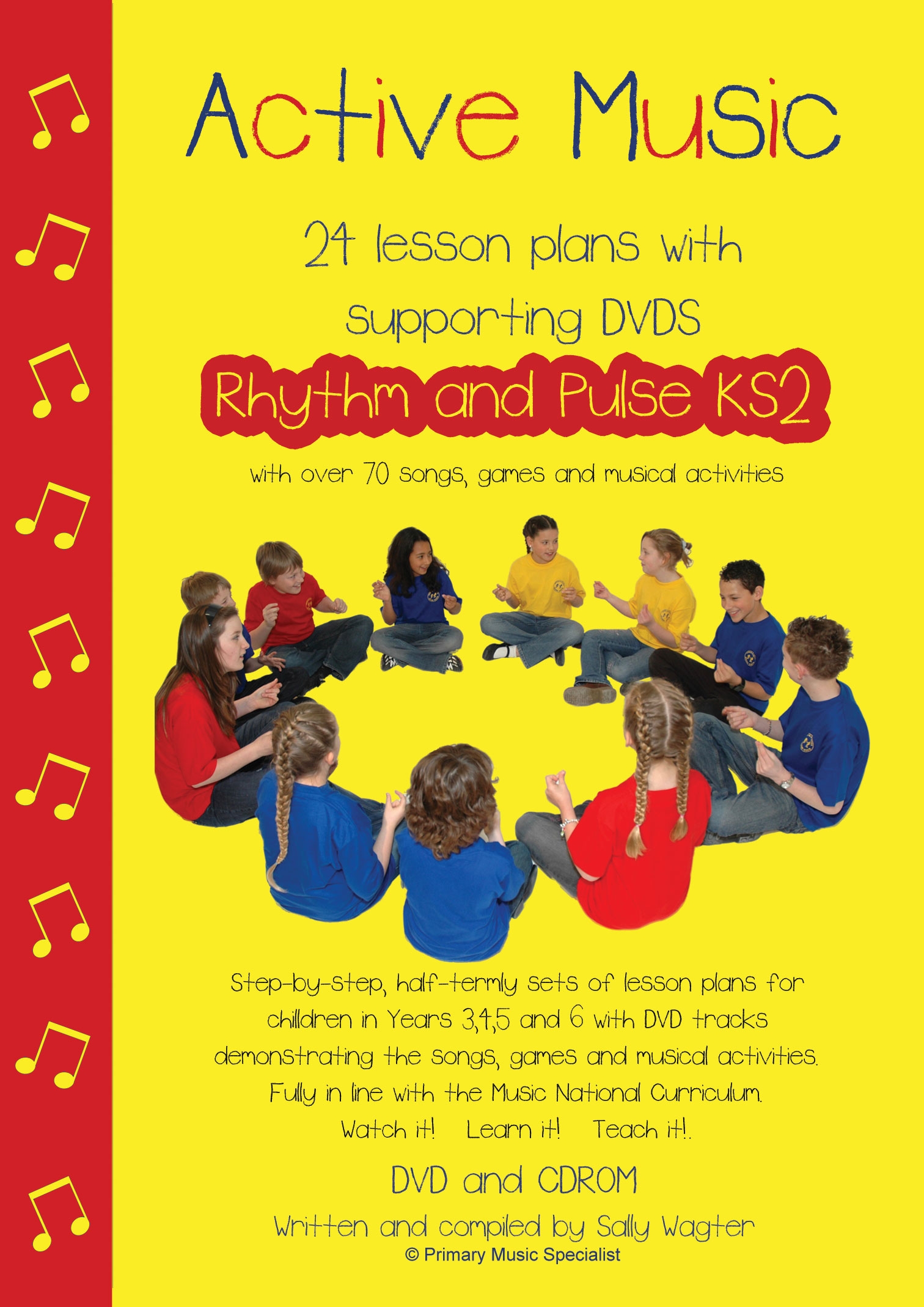
Welcome to Active Music.  We are a company brimming with primary music activities for you. One of our products is a series includes 168 tried and tested lesson plans for Key Stages 1 & 2 and over 500 DVD clips of children demonstrating the singing games and musical activities. Designed to develop children’s inner musicality, this scheme effortlessly brings the fun of music back to the classroom.

  • 168 photocopiable lesson plans
  • DVD clips demonstrating over 90% of the activities to be taught
  • Musical notation provided for all songs within the lessons
  • Extension ideas and activities included
  • Differentiation within the lessons as children become more experienced
  • Totally skill-based lesson plans
  • Plans to cover 2 terms of teaching time for each year group
  • Learn in easy-to-follow steps alongside the children

FREE 2-WEEK TRIAL!

Why not ask for a FREE 2-WEEK TRIAL?  We are willing to send you the FULL SET of Active Music to look at and try out – That’s 8 CDROM/DVD box sets.  We will even pay the postage, so you can see it easily and without any inconvenience.  All we ask is that you look after the packs and should you not require them that you can help us out with the return postage.  WOW!

To view the content and find more info on each of the 8 box sets, click HERE

To view some sample Key Stage 1 video clips, click HERE

To view some sample Key Stage 2 video clips, click HERE

Thinking of where to go next with your music in school?  Wanting fresh ideas? Thinking of purchasing a new music scheme?

Why would you choose ACTIVE MUSIC?

We provide well-sequenced tried and tested lesson plans with clear progression in musical skills within each year group and between the year groups.  For TOTAL CERTAINTY as to whether you are teaching as the lesson plans suggest you can view over 90% of ALL the games and musical activities within the lesson plans.  Should you lack confidence in actually delivering the lesson, the DVDs can help you.  By showing them on the interactive whiteboard, your children can see how the games go and what is expected of them. Some classes sing and play the games along with the DVDs.

ACTIVE MUSIC is very easy-to-follow and as a teacher, you can learn alongside the children.  It is TOTALLY SKILL-BASED, so the focus is on rhythm, pulse, singing in tune, using instruments and creating compositions etc, rather than linking music to topics such as Victorians or insects, for instance.  That is because we believe music is a valid and vital subject in itself, benefitting the children in thinking, sequencing and coordination skills among many, many others.

ACTIVE MUSIC contains so many ideas perfect for primary children and having more tried and tested ideas to develop children’s musicianship skills can only be a good thing, can’t it? Imagine having over 500 ideas to add to your repertoire, to keep forever and use throughout your career?

Don’t take our word for it – see what other teachers say?

‘The lessons are fantastic – I love them. I’ve been teaching straight from the plans and adapting as I go. They’ve given me lots of repertoire and have helped my confidence. The children love it – it’s the best music teaching I’ve ever done.’

Louise Tinker, South Bersted Primary School, Bognor Regis

‘Teachers who are not even specialists are saying to me ‘We can do this!‘ It’s simple, usable, effective and the children love it. It’s absolutely genuinely true. This is just what we need and we know where to go next because it’s in front of us – thank you so much…’

Rachel Kendal – Dept Head, Thomas-A-Becket First School, Worthing

Why not give ACTIVE MUSIC a try in your school? To register for the two-week free trial in January please email Sally at office@primarymusicspecialist.com.
Cup of tea?

Tea and a chat?

What could you do with an hour?  Have a cup of tea?  Chat to a colleague?  Catch up on other work? Spend quality time with your children at home? How long do you reckon it takes to write a whole music lesson from scratch?  An hour or so?  How long do you reckon it takes to sit down and work out an overview for medium and long term music lesson plans for your whole school?  Possibly 50 or 60 hours over a period of time? It’s on-going isn’t it.

How would you feel if that time was given back to you?  You could choose how to spend it.  In fact, forget the tea, you could go on a holiday!  Also, isn’t half the time of planning spent thinking about it? Coming up with ideas, resources, repertoire, ideas?  Working out how it all fits in? Making sure the music skills the children are learning are progressive? Making sure the activities used are fun and engaging for all the children in your class?

I know you wouldn’t compromise on quality and want to be the best music teacher there is – who wouldn’t?  But don’t you also think that life is about more than work?

Would you spend £1 to claim one hour of your working life back?  That’s all a music lesson plans costs… and would you spend 10p on a video clip to make sure that you understood the activity and were getting it right immediately, without having to read all the instructions?  That’s all it costs….

Think about it….Why not FIND OUT MORE? Why not have a FREE 2-WEEK TRIAL?

Our approach to teaching musical skills

Our child-centred musical approach is derived from many years of teaching and research and is inspired by the teachings of Zoltan Kodaly.

Musical skills are taught progressively, moving from the simple to the complex in small, logical steps.

Children will be learning the musical elements of pulse, rhythm, and in-tune singing using solfa through a wide range of musical repertoire.

Repertoire includes chants, songs, rounds, canons, circle games, name games, rhythm games, action games, turn-taking games, puppet games and more.

Children progress to instrumental activities, arrangements, compositional work and notation as they gain in experience and confidence.

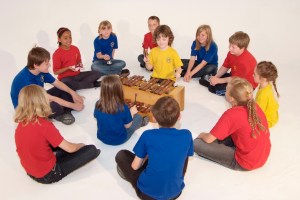
Singing game with xylophones

How do you help your non-specialist teachers to teach music?

What does your role as a Music Coordinator involve?

As a Music Coordinator you are asked to do many things. As well as writing/finding a music scheme of work, delivering quality music lessons and organising all the Nativities, concerts and services etc, you are also expected to enable all the teachers in your school to teach quality music to their classes.

How do you support your non-specialists in teaching music?

Obviously you can write or find music lessons and pass them on but how do you know your less confident teachers can deliver them so that a unified and progessive approach is taken to music throughout your school? Wouldn’t it be great if each teacher had their own private tutor?  Would that ease some of your responsibility?

Active Music is like a private music tutor to every teacher

Active Music has been written to take the role of a private tutor so that each individual teacher can follow what to do and see the games and activities that they will be teaching on their computer before the lesson. They can even use the tracks as teaching tools.

How does this help you? 

It means the teachers in your school won’t keep coming to you to ask how a song goes or to explain a game or activity.  It also means that there will be a unified approach throughout your school – each year group can focus on the same aspect of music throughout each half term, so that all will be singing ‘from the same hymn sheet’ as it were. It means that you will know that quality musical activities are being taught in your school and you are clear what each teacher is covering from the Music National Curriculum.  It also means that your teachers are gaining musical training, by first learning, then teaching the musical activities in small, easy-to-digest steps. Therefore you are fulfilling your role very sucessfully.

Spend less time but be successful as a Music Coordinator!

I have written Active Music with exactly you in mind!  My aim was to research hundreds of fantastic skill-based musical activities, place them in a clear order to ensure progression and then deliver them to you in a consice, easy-to-follow format. The DVDs were then created – over a period of a few years – to ensure that all the activities could be seen to bring security and certainty to teachers lacking confidence.This is an ideal way to help your non-specialist teachers teach music.

Don’t take my word for it – please see our TESTIMONIALS page.

Like to try Active Music? Please learn more by visiting ‘ABOUT ACTIVE MUSIC’ and then contact us for a FREE 2-WEEK TRIAL!!  You can also always phone for more information and to chat about your Music Coordinator role.

Looking forward to hearing from you,

Sally Wagter…

Free 2-week trial!

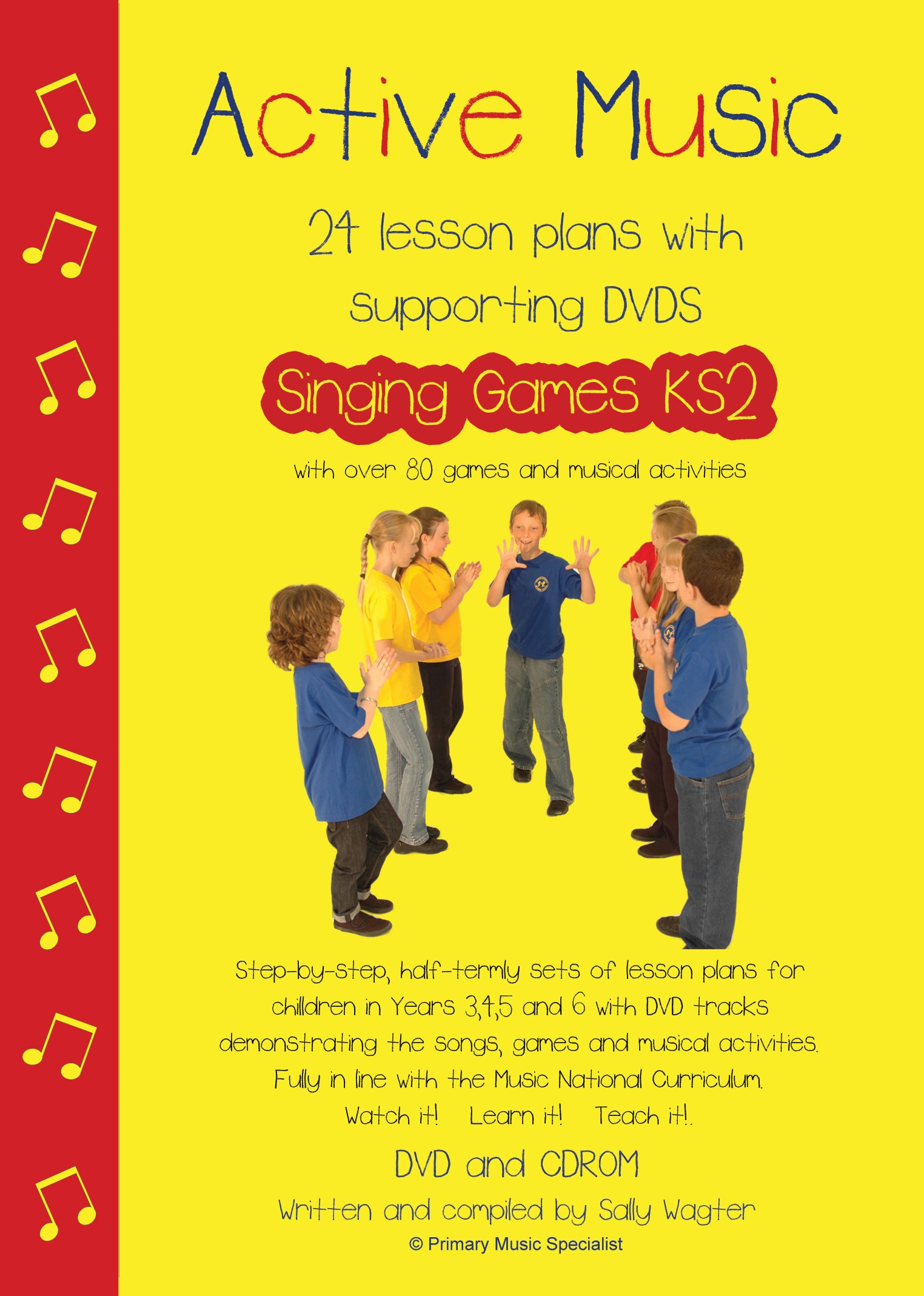
Singing games

Welcome to ACTIVE MUSIC!  I hope you can find some resources here to inspire you with your primary music teaching.  I have 12 lesson plans for you, over 20 notations of fantastic games and activities and 10 video clips of children playing the games, for you to enjoy!

FREE 2-WEEK TRIAL!  

We can send you the full ACTIVE MUSIC set for 2 weeks to have a good look at and trial in your school.  Test it and see.  You will only know if will be helpful to you if you have a go.  See if your teachers are inspired and your children thoroughly enjoy the activities.  A recent school said of their trial that the children loved it and there were a lot more instruments suddenly being used in the school! They also found it easy to follow, which it is! The lessons are progressive and build on the children’s musical skills in easy steps.  Why not give it a try? Please click HERE for more Active Music details.

If you would like to go ahead with the FREE TRIAL please email Sally at office@primarymusicspecialist.com with your full school address and we will happily organise that for you.

Run your own Music Clubs and Workshops – Julie’s story

Start your own Music Business

Using all our singing games and musical activities, we train people to run their own music businesses for primary children – running after school music clubs, music workshops in schools, private music classes, Saturday and holiday workshops etc.  This is a testimonial from Julie Decarroux, who trained with us.  She loved her work and was very successful.

Since Julie trained with us, we now have an easy-to-learn-from-home training package. Please visit www.startyourownmusicbusiness.com for more information.

After school music clubs

“I trained with Sally Wagter in 2007 and was so impressed by how well organised her course was.  Not only were we given lots of material and a fantastic method to teach, but we were also equipped with the practical business skills to start up in schools, such as knowing what would be required from us in terms of CRB and insurance, and plenty of leaflets and DVDs to get in touch with the headteachers and parents. It was just so helpful to have all this promotional material, as it meant that i could start applying to schools straight away.

I immediately got some work in 3 primary schools as an afterschool music club leader, and stayed there for 3 years until I moved to another city, earning about £70 profit per weekly club (15 children per club paying £5.50 each, minus £13.50 hall hire), so about £210 per week. After 2 years of running these clubs I was contacted by the local Music Service. They were very impressed with the method I’d learn form Sally (Active Music)which was completely in line with the National curriculum and most importantly delivered in a fun and interactive way thanks to all our singing and musical games.

They hired me to teach the KS1 curriculum for them which I enjoyed a lot. Since moving to Bristol I am planning to start my own independent music school still using singing and musical games as a foundation as well as the Kodaly method to teach rhythm and pitch, and incorporating percussion playing to teach primary children the foundations of music in a fun way.

I am so grateful to Sally for sharing her passion and precious method because it just works so well with children: they love it and I have so much fun teaching them!”

Music National Curriculum levels explained – level 4

Music level 4

NATIONAL CURRICULUM:      LEVELS INTERPRETED AND IDEAS GIVEN

LEVEL 4:


MAINTAIN OWN PART IN A GROUP, PERFORMING BY EAR and FROM SIMPLE NOTATIONSFor the children to successfully keep a steady pulse, play an accurate rhythm or sing a melody in tune as part of a group piece.  They may need to follow a conductor to achieve this. Performing by ear involves playing from what you hear, remember or are improvising at the time.  Children are also to read from simple rhythm notations and melodic notations  C D E F G (note names)  or D R M S L (solfa names).

SING IN TUNE WITH EXPRESSION – (same as level 3) The ability to achieve this will depend a lot on the amount of experience they have had of singing and how much practise in pitch-matching skills.  It is good to ask children to sing solos – if they are willing – and to take notes etc and direct teaching accordingly.  Some will still need help with singing 2 or 3 notes in tune while others will have naturally strong and in-tune singing voices with a wide range and a good tone.  Good ways to test this are to ask the children to sing solos of songs they have learnt in class.  It can often be surprising who is hiding a lovely singing voice and who, though confident, cannot yet sustain a melody. If they can’t, they can still learn through lots of games involving the practising of 2,3,4, and 5 note melodies.

PERFORM SIMPLE RHYTHMIC PARTS Take a 4-phrase chant using rhythm ingredients the children are familiar with . Divide the class into 4 groups and give each a line to clap simultaneously.   Build and reduce the layers of sound. In this way every child is performing a rhythmic part. An ostinato is another successful way of achieving this objective. While one group claps the rhythm of a chant another claps a separate chosen rhythm repeatedly throughout.  Alternatively the children can write and perform their own rhythm patterns, using voices, clapping or instruments.

PERFORM SIMPLE MELODIC PARTSas above but with melodies.  Take a song based on the pentatonic scale (so all the notes sound good when played together). Give each group a line to sing, building and reducing the layers of sound or take a melodic ostinato for a group to perform while the melody is sung. Alternatively the children can write and perform their own rhythmic and melodic patterns, using voices or tuned instruments.

IMPROVISE RHYTHMIC AND MELODIC PHRASES AS PART OF A GROUP PERFORMANCEThere are many good games to develop this skill. The simplest rhythm one is for the class to chant ‘1,2,3,4’ in time to a pulse, followed by a child playing a 4-beat improvised pattern, followed by the class chanting ‘1,2,3,4’ again. This continues round the room. The idea is for the children to improvise in turn while keeping a steady pulse throughout the whole piece. This can be developed to 8-beat phrases. Exactly the same game can be played with melodies using notes from the pentatonic scale.  In order to be able to improvise in groups children need to be able to keep in time with a steady pulse and listen clearly to each other.

COMPOSE WITHIN MUSICAL STRUCTURESGive the children a remit – Eg. Write a 4-beat rhythm pattern.  That is already a composition.  They can then be asked to write 4 rhythm patterns, add a melody from a choice of notes and even add words. In this way they are starting to write their own songs within a clear musical structure. Another idea is to each write their own 4 or 8-beat pattern and work in groups to perform them, building and reducing the layers of sound. On a more Creative Curriculum basis, the structure may be to compose a piece of music based on a particular subject and to include voices only for example.

DESCRIBE, COMPARE AND EVALUATE DIFFERENT MUSIC USING APPROPRIATE MUSICAL VOCABULARYLook at the specific musical elements within a piece. See GLOSSARY (if using Active Music) It is important to clarify exactly what you are looking for.

Music National Curriculum levels explained – level 3

Music level 3

NATIONAL CURRICULUM:      LEVELS INTERPRETED AND IDEAS GIVEN

LEVEL 3:


RECOGNISE HOW SOUNDS CAN BE COMBINED AND USED EXPRESSIVELY This can be achieved through listening to recorded music, recognising different types of instruments being played, in which combination and discussing the effect. Children can listen for different instrumental sounds, different voice sounds (harmonies) and even sound effects.

SING IN TUNE WITH EXPRESSION – it is interesting that children are expected to be able to sing in tune at this stage – considering many adults still struggle to sing in tune. It will depend a lot on the amount of experience they have had of singing and how much practise in pitch-matching skills.  It is good to ask children to sing solos – if they are willing – and to take notes etc and direct teaching accordingly.  Many will still need help with singing 2 or 3 notes in tune while others will have a naturally strong and in-tune singing voice.  Good ways to test this are to ask the children to sing solos of songs containing 2,3,4 and 5 notes only.

PERFORM SIMPLE RHYTHMIC PARTS THAT USE A LIMITED RANGE OF NOTESTake a chant such containing limited rhythmic ingredients, E.g. Ta and Te-te.  Divide the class into 4 groups and give each a line to clap simultaneously.   Build and reduce the layers of sound. In this way every child is performing a rhythmic part. An ostinato is another successful way of achieving this objective. While one group claps the rhythm of a chant another claps a separate chosen rhythm repeatedly throughout.  Alternatively the children can write and perform their own rhythm patterns, using voices, clapping or instruments.

IMPROVISE REPEATED PATTERNSChildren make up rhythmic patterns on the spot and start to play them repeatedly. Others can join in with their improvised patterns. This will only work if the children are given and listen to a steady pulse and each other. They will also need to know how long to make their pattern (4-beats is a good start)

COMBINE LAYERS OF SOUND WITH AWARENESS OF THE COMBINED EFFECT Experimenting with different timbres (types of sounds) and their combinations and making decisions as to which most effectively create the effect they are looking for.  This could involve combinations of rhythms, melodies, instrumental sounds etc. Ostinatos are ideal ways of layering sounds. Layers of sound can be built up and reduced to create effective compositions.(Ideal within Creative Curriculum).

RECOGNISE HOW MUSICAL ELEMENTS ARE COMBINED AND USED EXPRESSIVELYUnderstand how music often needs a steady pulse, the rhythm that fits in with it and how the melody is added on top. Recognise how music changes according to the dynamics (volume) and tempo (fast and slow pace). Children can also look at different rhythmic and melodic patterns and see how well they fit in together.

COMMENT ON INTENDED EFFECT OF MUSICwith regards to their own compositions, children need to have very clear objectives to be able to do this well. Eg, to listen to each other, start and stop at the same time and keep a steady pulse. The fewer aspects they have to listen out for, the more accurate they can be in their assessment.  With regards to pre-recorded music, again, clear specifics of what to listen for are vital. 

Music National Curriculum levels explained – level 2

Music level 2

NATIONAL CURRICULUM:      LEVELS INTERPRETED

LEVEL 2:


RECOGNISE HOW SOUNDS CAN BE ORGANISED – how rhythms can be notated in stick notation and melody added etc. How sounds can be chosen for specific remits and put into an order – beginning, middle and end, creating compositions.

SING WITH A SENSE OF SHAPE OF THE MELODY – This does not mean singing completely in tune, but being able to follow the basic direction of the melody as it rises and falls.  Some will obviously be able to sing in tune at this stage but most should be able to follow the shape of the melody to differing degrees. It’s worth asking children to sing solos and keeping notes.

PERFORM SIMPLE PATTERNS AND ACCOMPANIMENTS KEEPING TO A STEADY PULSE – Play a steady drum beat for the child to clap to or listen to music with a steady pulse and ask the child to hear the pulse and show you with actions.  If their pulse is steady and regular they have mastered it. They ideally need to show they can do this without you leading. To play patterns to a pulse they can repeat rhythm patterns you give them to the pulse of the drum.

REPEAT RHYTHMIC PATTERNS – Clap a short rhythm pattern for the child to clap back. If they achieve this accurately, make the pattern longer. Most children should be able to clap back a 4-beat pattern at this stage although a few will not ‘get it’. Depending on the amount of practise they have had, many should also be able to clap back 8-beat patterns.  Again, it’s worth keeping notes.

ORDER SOUNDS WITHIN STRUCTURES – Choosing sounds for specific remits and deciding when to play them, to create effective compositions. (Creative Curriculum)  Giving children blank graphic scores and asking them to fill in different patterns for different sounds also works well as they have the outer structure and are ordering the sounds within it.

REPRESENT SOUNDS WITH SYMBOLS – Rhythm names, a few note names – C D E F G or solfa symbols for pitch,  – S L M, depending on which they have learnt. Alternatively they can make up patterns within graphic scores or make up their own notations.

PERFORM WITH AWARENESS OF OTHERS – Keeping a steady pulse, starting at the same time, singing at the same time as the rest of the group, listening to each other, following a conductor.

RECOGNISE DIFFERENT MOODS IN MUSIC – Play a variety of different recorded music and discuss the differences – how the music makes the child feel – Children can discuss emotions, move to the music or even draw in response to a variety of musical styles.